 Modern Estate Preparation
A version of the same experience comes up over and over again when I talk with families:
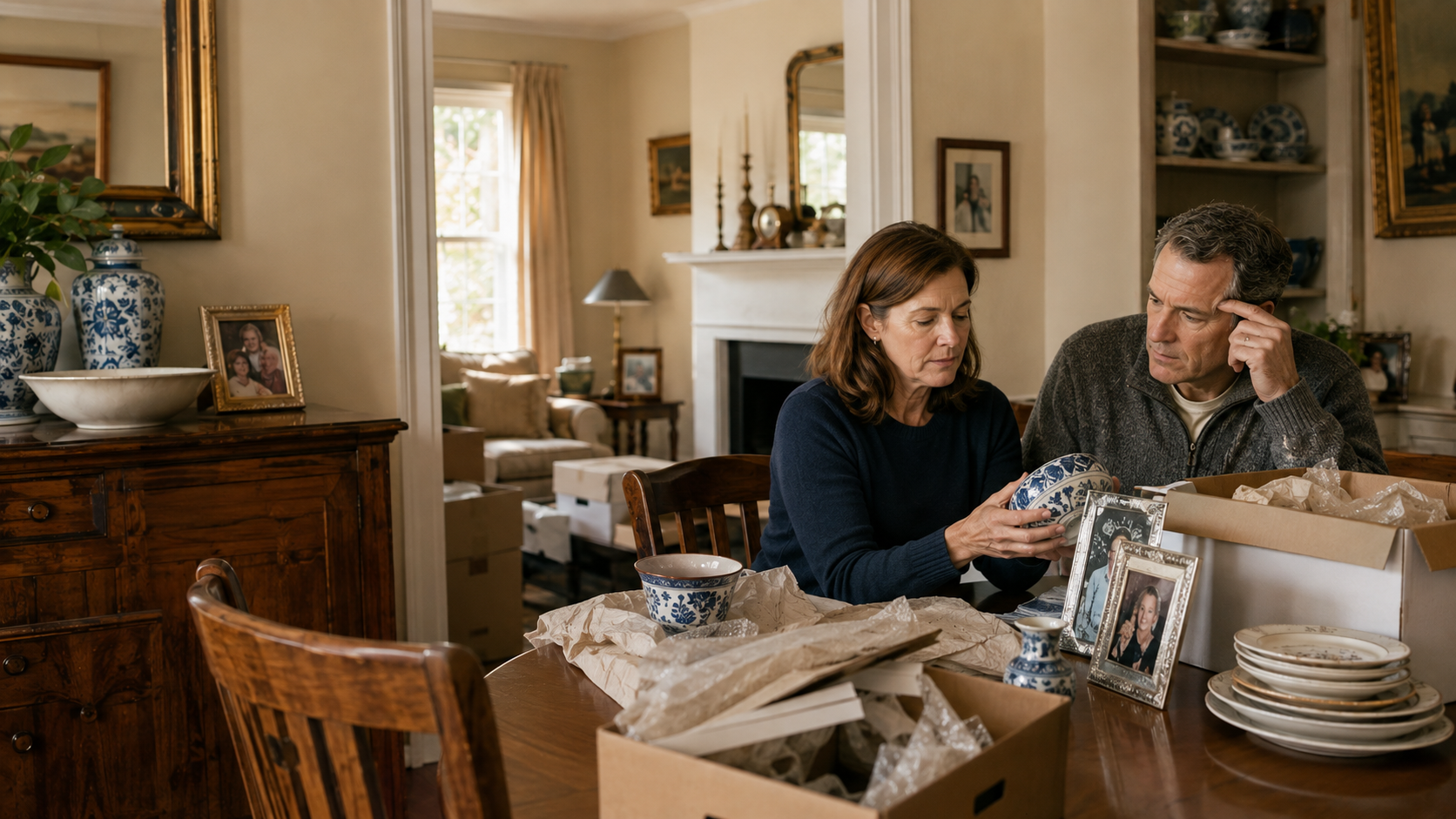
We had all the legal documents. We thought we would be in good shape. Mom had done everything she was supposed to do. But when the time came, we still weren't prepared. Clearing the house and figuring out what to do with everything while we were grieving became one of the greatest sources of stress for me and my siblings.
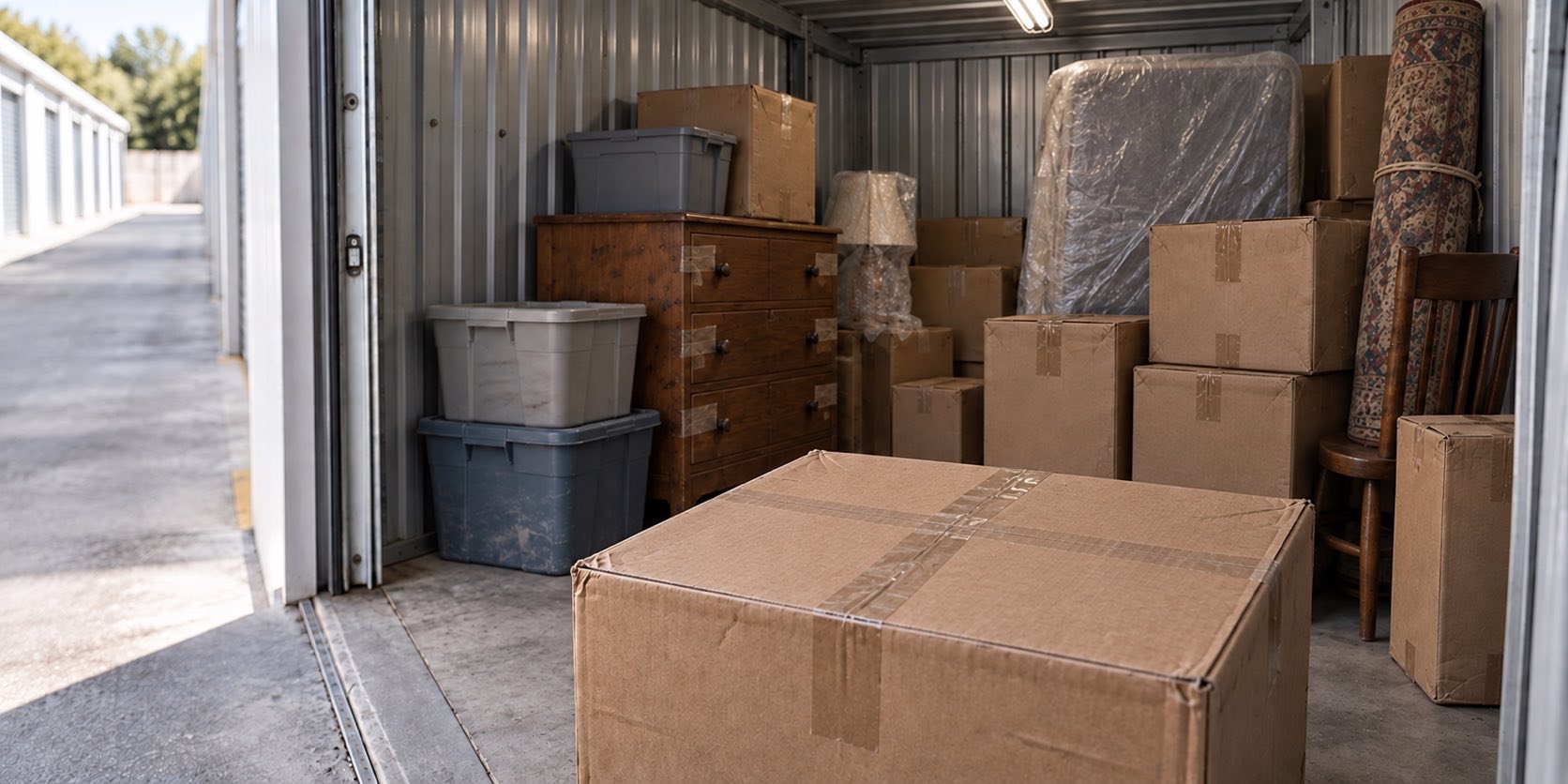
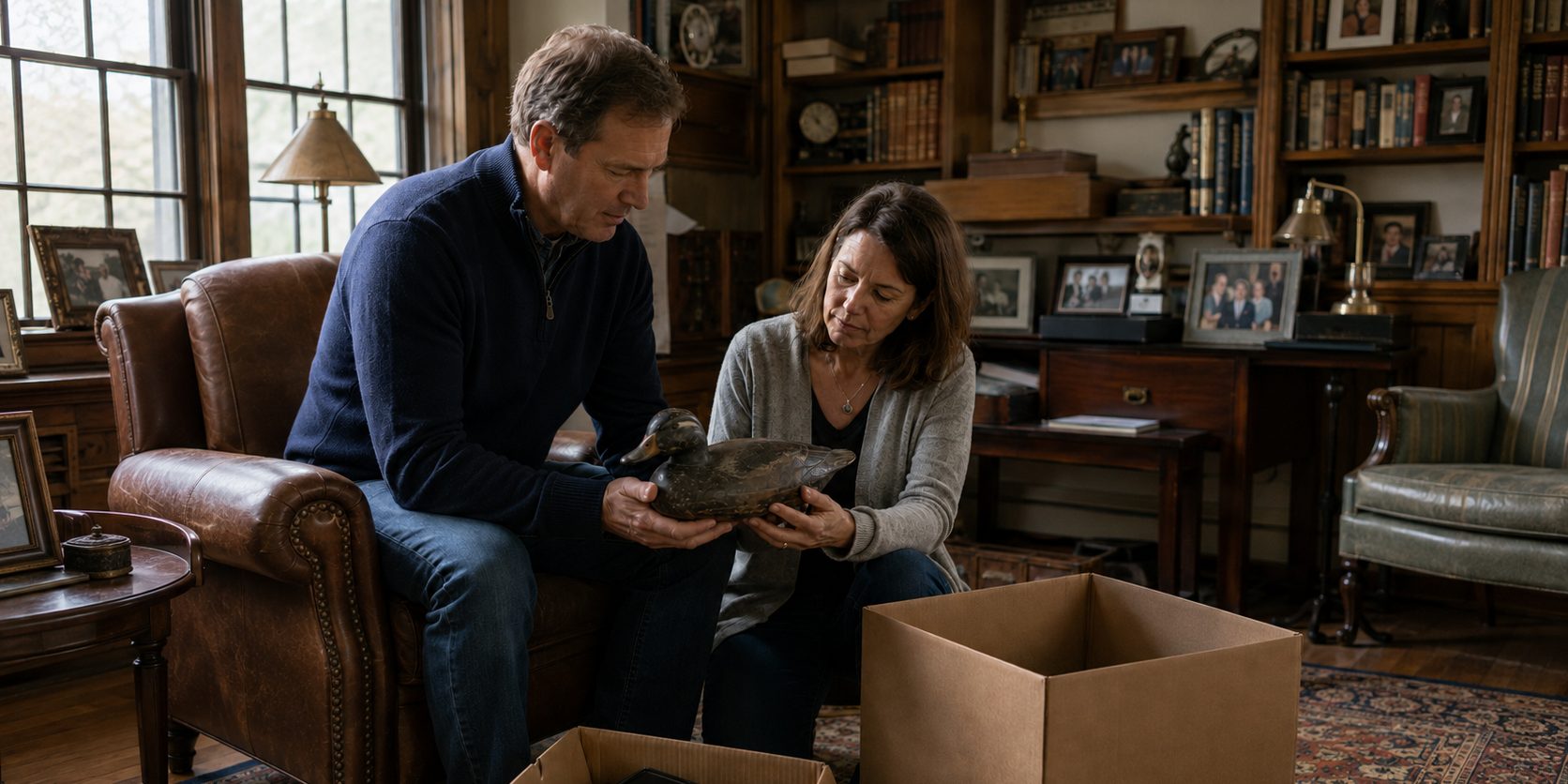
The details vary from one family to the next, but the pattern is remarkably consistent. A parent worked with an attorney to craft a will or trust and made thoughtful decisions about the major parts of the estate. Yet the family was still left standing in a home filled with belongings, trying to determine what things were, what they meant, who might want them, and what they should do with it all.
It is the same problem that led me to start Legacy Heirloom. After my grandmother died, my family had the legal documents we needed, but those documents could not tell us the stories behind her belongings, explain which objects carried sentimental or financial value, or help us make hundreds of individual decisions about what to do with it all.
If so many families encounter this problem, why does it continue to exist?
Repeating the same painful experience generation after generation
Part of the answer is that most people never make a formal estate plan at all. But that doesn't explain why families who do have plans, still struggle.
Estate planning can be hard to face. It asks people to think carefully about death, incapacity, money, responsibility, and family relationships. Choosing an executor, establishing powers of attorney, deciding how assets should be distributed, and documenting healthcare wishes can be heavy decisions that take real time and emotional energy.
By the time the estate plan documents have been signed, many people are ready to be finished. They may have added wishes for a few important items directly in their will. They may have been given a blank spreadsheet and told they can finish this part at home. But a lifetime of belongings reduced to rows in a spreadsheet can feel like an enormous administrative chore. One that often never gets done. Unassigned items typically get lumped into a generic clause instructing the children to divide everything equally.
Attorneys tell me the conversation frequently ends with a version of "my kids don't want any of my stuff," and the item-level planning stops there. But the reality is that whether or not they want it, they're getting it.
Not only are they inheriting all the stuff they don't want, they're inheriting the responsibility of figuring out what to do with it all.
The documents were never built to hold the context we need
None of this means the plan failed. It means we have been asking it to do a job it was never designed for.
A will can say who receives the contents of a house. It cannot say that the wine cork in the trinket dish on the bureau came from the bottle your parents drank at their wedding, that the tools in the garage are the ones your grandfather used to build the family barn, or that the painting stored in the closet is worth having appraised before deciding it goes in the donation pile.
Legal documents were built to hold directives. The knowledge behind a lifetime of belongings, the stories and the practical details that help us understand those objects, has never had anywhere to live except in scattered notes and memories. When we lose those, we lose the story and part of our legacy with them.
Understanding the estate preparation landscape
The work of moving that knowledge out of one person's memory and into a system families can actually use deserves a name. We call it estate preparation. It is the act of organizing the information, context, and knowledge that prepare others to confidently carry out the responsibilities they will eventually inherit.
Estate planning and estate preparation complement each other. Estate planning establishes legal authority, rights, and intent. Estate preparation makes that foundation understandable, accessible, and usable in a family's life. Together, they help create estate readiness: the condition in which the right people have what they need to make informed decisions and act on them with clarity and confidence when the time comes.
Preparation stretches across six inter-disciplinary domains:
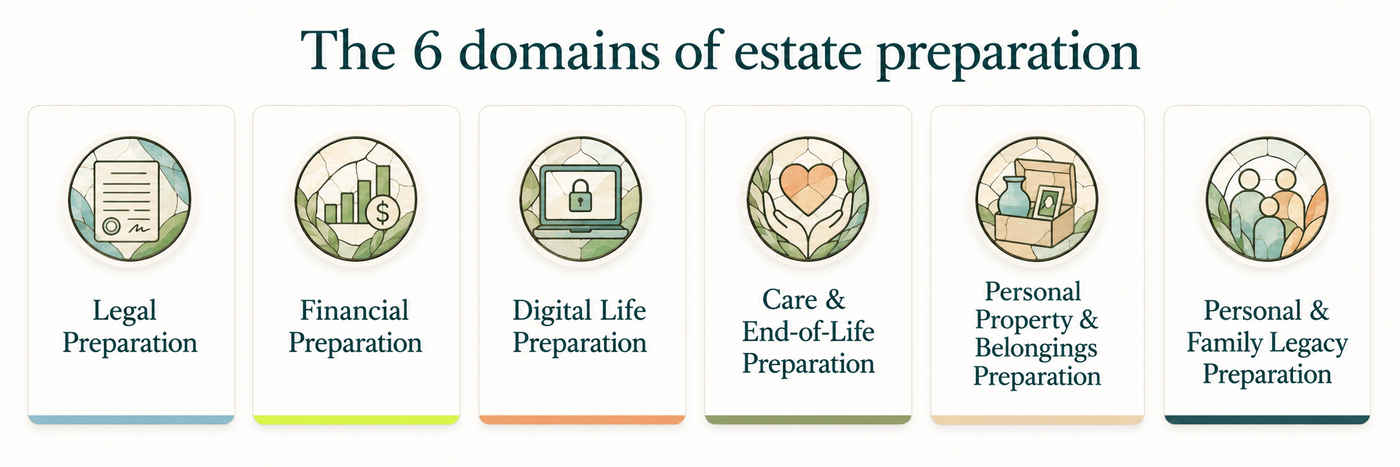
Within this landscape, personal belongings are easy to overlook amid other consequential decisions. Yet they carry both practical responsibility and personal meaning, linking what a family needs to prepare for with what it hopes to carry forward.
Where Legacy Heirloom fits
Legacy Heirloom brings personal property preparation and legacy preservation into a secure record shareable across generations. It is the first system that allows someone to tell the story of their lives through the objects that shaped it. And it is the only system that combines the beauty of storytelling with the practical utility of estate preparation.
A conventional inventory can identify property without preserving its meaning. A storytelling product can preserve memories. Legacy Heirloom creates an intergenerational record that does both.
We're no longer just passing down our things. We're passing down an understanding of what they are and the stories they tell of the people, places, and experiences they represent. That clarity is the greatest gift we can give our families to break the cycle of inherited guesswork.