 On Meaning
On July 4, 2026, the United States will commemorate the 250th anniversary of the signing of the Declaration of Independence. Across the country, museums, archives, historic sites, and local communities are using the anniversary as a chance to reflect on the people, ideas, and events that shaped the nation. America250 describes the milestone as a national commemoration of the 250th anniversary of the Declaration of Independence, and the National Archives will mark the day just steps away from the original document itself.
That is the kind of history we expect to preserve.
Founding documents. Famous signatures. Battlefields. Monuments. Names we learned in school.
But the story of the Revolution was not carried only by declarations and generals. It was also carried by trunks, teapots, tea chests, and canteens.
Ordinary objects.
Things people packed, used, hid, drank from, wore, carved, saved, and passed down.
That is what makes this anniversary such an interesting moment to think about family history. Because the same thing is true in our own homes. The objects that tell the story of a life are not always the grandest or most valuable things. Sometimes they are the ordinary things that shaped daily routines and family rituals.
America's founding story is filled with objects like that.
John Hancock's trunk
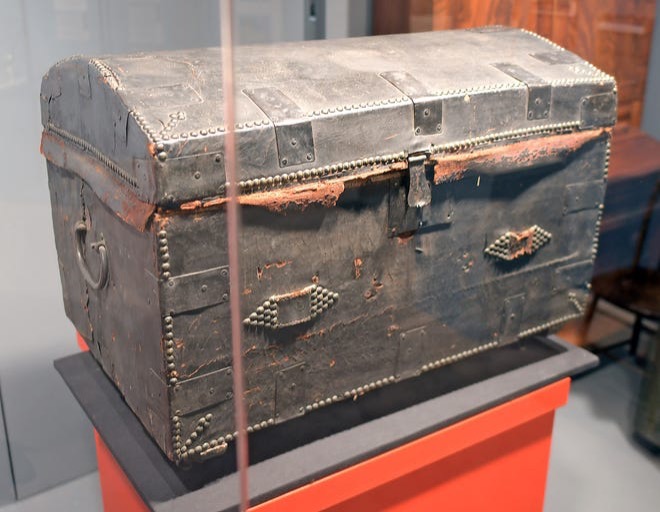
I was reminded of this earlier this year when I visited the Museum of Worcester with my daughter on Patriots' Day. In Massachusetts, Patriots' Day commemorates the Battles of Lexington and Concord, which began the American Revolutionary War on April 19, 1775.
The Museum of Worcester holds John Hancock's trunk, sometimes referred to as his "trunk of treason." The trunk held personal notes and correspondence that British authorities would have considered traitorous. In April 1775, as British troops advanced toward Lexington, Paul Revere and Hancock's clerk helped retrieve and hide the trunk, protecting not just a physical object but the sensitive papers inside it.
On its own, it is a trunk. With its story, it becomes something else entirely.
It becomes a reminder that history sometimes depends on what someone thinks to protect in a moment of danger. It also reminds us that preservation is not always formal. Sometimes it begins with someone saying, "This matters. We need to save it."
The Robinson Half Chest
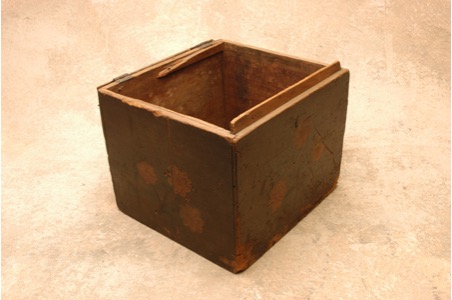
The Boston Tea Party offers another example.
One of the few surviving tea chests from the Boston Tea Party, now known as the Robinson Half Chest, is displayed at the Boston Tea Party Ships & Museum. According to the museum, 15-year-old John Robinson found the small wooden chest partially buried in the sand near Dorchester Heights on the morning after more than 90,000 pounds of East India Company tea had been dumped into Boston Harbor. He picked it up and brought it home.
What happened next may be the most remarkable part.
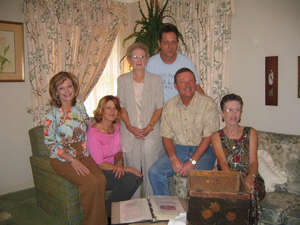
The chest stayed in the care of Robinson's family and related descendants for more than two centuries. It was passed from hand to hand, carried from place to place, and remembered through family stories. At one point, Mary Lurana Cade Ford, who received the chest from her grandfather as a child, remembered using it as a container for her dolls. Later generations knew it simply as "the box."
But the family did more than keep the object. They kept working to preserve its story.
A dictated letter from 1897, a notarized affidavit from 1948, family photographs, and later research by descendants helped turn family lore into documented provenance. Helen Ford Waring, a teacher and descendant connected to the chest, spent years gathering the facts that linked the object back to John Robinson and the Boston Tea Party.
That is what makes the Robinson Half Chest so powerful. It survived because someone picked it up. But it matters today because generations kept both the object and the story close enough for the meaning to endure.
The "No Stamp Act" teapot
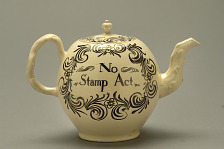
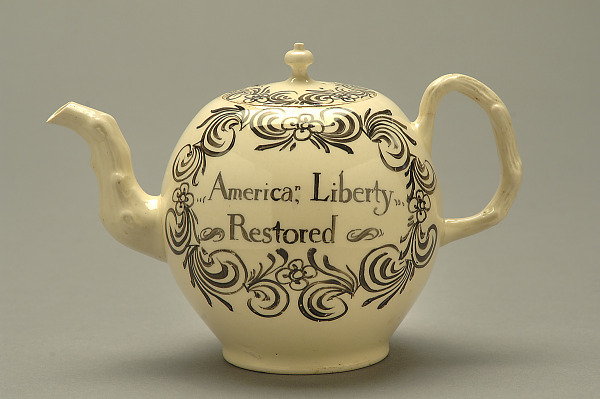
Some Revolutionary objects tell us about politics in the home. The Smithsonian's National Museum of American History holds a creamware teapot made in England around 1766-1770. One side reads "No Stamp Act." The other reads "America, Liberty Restored."
A teapot is domestic. It belongs on a table, in conversation, in the rhythms of daily life. But this teapot also carried a political message. It reminds us that history does not only happen in public squares. It happens in kitchens, parlors, workshops, and around tables where people talk about what they believe.
The soldier's canteen
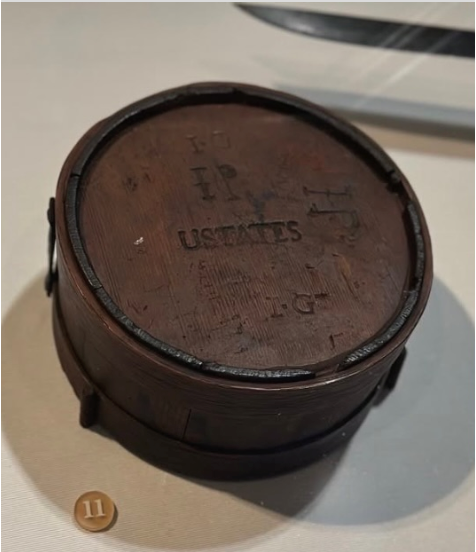
Other objects tell us about the experience of soldiers themselves.
The Museum of the American Revolution holds a rare wooden soldier's canteen from the 1770s marked "USTATES," indicating Continental Army use and ownership by the United States. The museum notes that the Continental Congress directed arms and equipment to be marked because of chronic shortages, theft, and negligence.
A canteen is not glamorous. It is practical. It carried water. It helped someone endure.
But the marking on it tells a broader story: a new country trying to equip an army, manage scarcity, and create systems where none yet existed. Through one plain object, we see the material reality behind the ideals.
That is why objects matter.
Not because they are old.
Not because they are valuable.
Not because they belong in a museum.
Objects matter because they help us see the people behind history.
As America reflects on 250 years, it is worth remembering that the Revolution was not only preserved through famous artifacts. It was preserved through the ordinary things people carried, used, hid, made, marked, and saved.
What these objects reveal
- A trunk protected papers.
- A tea chest held evidence of protest.
- A teapot brought politics to the table.
- A canteen revealed the practical burden of war.
Objects can outlast the people who used them, but meaning does not automatically transfer with ownership.
These objects shaped history because the people connected to them shaped history.
The same is true inside families.
Most of us have objects in our homes that will never appear in a museum. A recipe card in a grandmother's handwriting. A set of tools used to build a business. A military medal tucked into a drawer. A watch worn every day for decades. A quilt. A camera. A baseball glove. A platter that appeared at every holiday. A painting purchased on a family vacation.
To someone else, they may look ordinary.
To a family, they are anchors of memory that make a person, place, or season of life feel close.
But only if the story survives.
That is the fragile part. Objects can outlast the people who used them, but meaning does not automatically transfer with ownership. A child or grandchild may inherit the watch, the quilt, or the painting without knowing why it mattered, who used it, what it witnessed, or what it meant to the person who saved it.
That is how family history gets lost.
Not all at once.
Quietly.
One unlabeled photo at a time.
One object with no explanation.
One story someone meant to ask about but never did.
One box someone opens years later and says, "I wish I knew what this was."
America's 250th birthday is a reminder that preservation is a choice. Museums and archives preserve the objects that help us understand a nation. Families can do the same for the objects that help future generations understand where they came from.
This week, as families gather for cookouts, parades, fireworks, and time together, look around.
- What objects are part of your family's story right now?
- What would someone 100 years from now need to know to understand your life?
- What object would help explain the people and events that shaped you?
It may not look historic today.
But with its story preserved, it can carry meaning from one generation to the next.