 On Meaning
When most people hear the word heirloom, they picture something grand.
A diamond ring. A silver tea set. A portrait over a fireplace. A piece of furniture that has been in the family for generations.
That kind of thing can be an heirloom. But it's not the only kind.
To understand what heirlooms truly are, it's worth looking back at how the word got the "old money" connotation it holds today.
The word is humbler than you think
The word heirloom dates back to the 15th century. It's a compound of two ordinary English words: heir, meaning the person who inherits, and loom, which in Middle English simply meant a tool or implement. A loom was something you used. Something practical. Something that helped you do the work of daily life.
Put together, an heirloom was originally just a tool that passed to the next generation. Not a treasure. Not a relic. A useful thing your family kept using after you were gone.
Somewhere along the way, the meaning narrowed. Heirloom started getting attached to objects that were rare, valuable, or formally bequeathed. The word climbed the social ladder and left regular families behind.
The redefinition we need:
An heirloom is any object with a story worth carrying forward.
If we keep using heirloom to mean "something expensive that's been in the family for generations," most people will keep believing they don't have any.
But if we go back to the older, simpler definition, almost everything changes. An heirloom becomes any object you've used, loved, or kept for a reason worth telling someone about.
Walk around your house and look honestly at the things that would be hard to throw away. Look at the things that you keep because they are anchors of a memory.
Chances are there are dozens of heirlooms hiding in plain sight.
- The rocking chair in the corner that holds memories of babies and good books read on ordinary afternoons
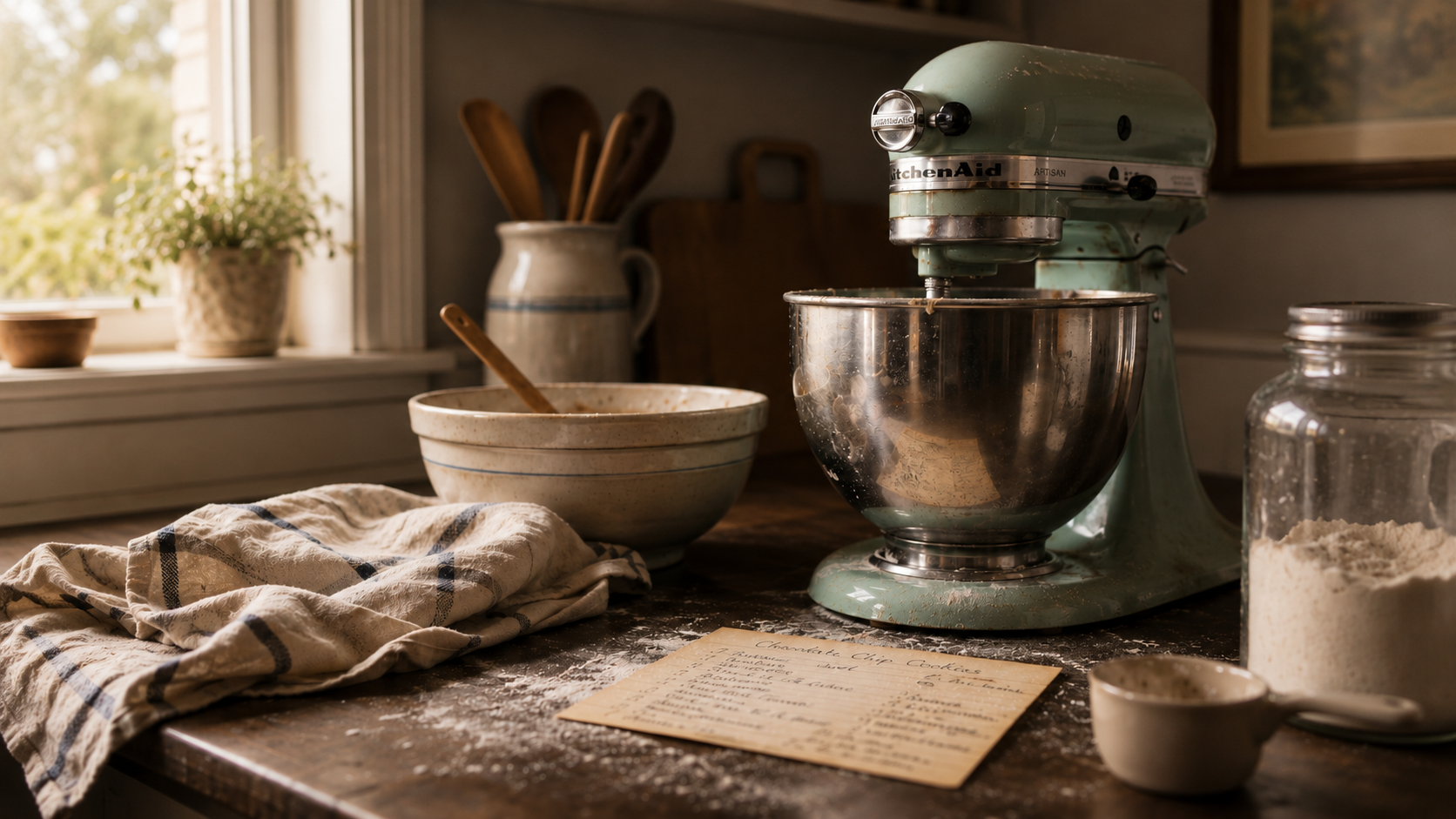
- The KitchenAid stand mixer you've used to bake everyone's birthday cake for the last 30 years
- The diploma hanging on the wall that holds the memory of your college days
The truth about heirlooms is that they are not always the objects that people would choose for a museum. They are often objects that witnessed daily life.
The things used again and again.
The things that are important because of the memory they represent.
The things that make another person say, "I remember that."
Start with 3 Objects
Tonight, choose three objects in your home that would be hard for you to throw away. Things you feel fit the new definition of heirloom. They don't need to be rare or expensive. They just need to carry a story worth keeping.
Use Legacy Heirloom to tell the story of what each one is, where it came from, and why you kept it. Who gave it to you. How you used it. What memory it holds. Whether there is someone you hope will have it someday.
That alone puts you ahead of almost everyone.